Episode Transcript
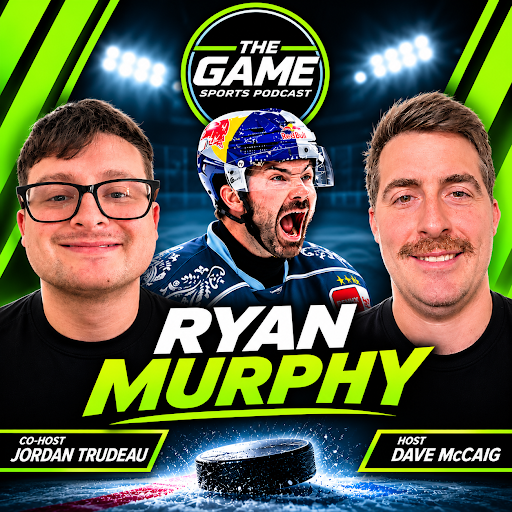
[00:00:04] Speaker A: Booyah. It's time for the Game Sports podcast. It's Your host, David McCaig Jr. The game is a Studio 726 original series featured on all platforms. YouTube, TikTok, Instagram, all the Game Sports podcast and for this special edition show. Very much looking forward to this one. Before we get to my intro for that guest and bringing in that special guest, the co host joining yours truly here, the one, the only from the Chuck A. Puck segment and from Strike Zone and from Top Jet, he's on all the segments, Jordan Trudeau. Trude's my friend.
[00:00:39] Speaker B: Good morning. Good morning
[00:00:41] Speaker A: everyone. Yeah, it is one heck of a morning. And you know what? I like that you went with the all black look today. We're almost matching. But your sweater's a lot cooler than mine, Sue. Greyhounds representing right there, which I think our guests might roll his eyes to.
[00:00:53] Speaker B: Yeah, maybe a little bit. Probably
[00:00:55] Speaker A: might roll his eyes to it. Now getting to our guest, but before I do that reminder, make sure you hit like follow, subscribe everyone on those platforms now. Our guest today has taken hockey career across North America and Europe.
And what a journey it has been for this individual. A former first round pick in the National Hockey League, selected 12th overall by the Carolina Hurricanes. He played 175 games in the NHL suit. Not for the Hurricanes, the Wild and the Devils. He's a former captain of the Kitchener Rangers where he once put up an incredible 79 points in 63 games as a defenseman. That's wild by the way. He represented the team Canada the 2013 World Junior Hockey Championship, was named top defenseman in 2011 and the U18 championship. And in 2021 took home the prestigious Eddie Shore award as the American Hockey League's Defenseman of the year.
Now he's played more than 700 professional regular season games across the NHL, the AHL, the KHL and European leagues and has won back to back Australian League championships with regional Red Bull Salzburg. I thought I would butcher that name. Don't think I did. Now, from the bright lights of the NHL to the bright lights with hockey overseas, he's experienced just about everything this game has to offer. Ladies and gentlemen, please welcome to the podcast Ryan Murphy. Ryan, how's it going man? How's that intro for you?
[00:02:17] Speaker C: That was, that was a lot. It's nice to hear. Sometimes though,
[00:02:21] Speaker A: it brings back memories. Right when I go through that, I randomly. Fun fact. When I first did that, the first guest I had as a special edition guest was Terry Ryan. And what I did is I I just ad libbed that and then I got reactions on social media, so I just kept going through with that. But that's hard a lot to memorize. I'm telling people I did read notes. Okay. I'm not that good at memorization anymore. I might be coming as I get into my mid-30s and older, but. Murph, I, I.
Welcome to the show, man. I, I want to know how, how are things treating you overseas? We were just talking off air. We got families there going on in life.
[00:02:58] Speaker C: Yeah, it's good. I mean, I don't think people know how good the hockey is in Europe and the lifestyle. So I'm in Munich probably, I don't know. In my opinion, a top five place to play in Europe and things are good. I'm still with Red Bull and for anybody who knows Red Bull, they like to, they like to win everything. So it's fun to play on, it's fun to play in an organization that winning is the only thing that matters. So I'm having a good time.
[00:03:25] Speaker A: If you ain't first, you're last. Is it the Ricky Bobby effect? Is that what we're seeing with Red Bull?
[00:03:31] Speaker C: Pretty much. Pretty much. You, you gotta be first. So we got a good team and I hope we can make some people happy this year.
[00:03:38] Speaker A: Awesome. Awesome. I saw some good social media clips that we're gonna get into later on at the end of the show to just have a little bit of fun with you, but I want to open the show going back a little bit to your junior days. Okay. I want to start in Kitchener and you were an offensive powerhouse, to say the least. Okay. And I'm, I remember watching you as an individual who went to and still goes to a lot of Sue Greyhound games. Okay. Obviously, you know, you were a threat back there on the blue line of Kitchener. That's putting it lightly. That one season told it right, that in there. What point did you realize?
Was it the 79 point season? But jokes aside, did what point did you realize that the NHL was a possibility and playing probably.
[00:04:21] Speaker C: Oh, honestly, it's crazy. I was talking to my dad and my brother recently about it and I think I always knew in a cocky way that hockey was what I was going to do.
I never had any doubts. I just thought it was something that was going to happen.
Kitchener definitely solidified it. I think being on a couple good teams and having some good seasons and it was a great time in Kitchener, to be honest. But I knew my whole life that I was going to be a hockey player. Which is crazy to look back at a kid thinking he was going to be a hockey player and being able to, to do it.
Haven't. Haven't done everything I wanted to do in the game. But
[00:05:00] Speaker A: right
[00:05:00] Speaker C: here we are, I don't know, 15 years in and it's. I still love it. So I've known a long time.
[00:05:05] Speaker A: Right. See, and like, you have had a lot of pressure. You know, when you play in Kitchener, I feel like when you're at that young age playing in the Ontario Hockey League, you, You have that pressure on yourself, but then that pressure for the team and perform for your team.
[00:05:18] Speaker B: That's a big organization too. Like. Oh yeah, they're. They're pretty hardcore. They're one of the top tier organizations in the league. So obviously there's. That must have been that internal pressure of playing for a team like as, like, dedicated as the Kitchener Rangers. Is that right, Ryan? Like,
[00:05:35] Speaker C: yeah, I. It's weird to think about, like, the pressure in hockey. Like, I didn't really feel it till later in my career. I just was.
I was just going about my business. So when I got to Kitchener, I think I was actually mad that I went third overall. I was like, I have no pressure. I didn't go first overall. And I had, you know, I had coaches there. I had a guy named Steve Spot who.
[00:05:56] Speaker B: Oh, yes.
[00:05:57] Speaker C: Honestly. Yeah, and honestly, he was just, he just told me to play the game. He never really tried to change me or teach me the defense side of it. He said, someone else will teach you that right now. You just go.
And I don't. For whatever reason, I didn't feel the pressure of being a high pick in a, in a big team. It was just hockey as usual. Go to school, go to the rink. And I was fortunate. We had, you know, Landiscog and Jeff Skinner and Tobias Reeder and the list goes on. So I think everybody felt that pressure, but we all were in it together and it was.
I never thought about it even like the NHL draft year. Like, usually you want to have a good year and I don't remember ever thinking that points mattered or, or anything about where I was ranked. It was. It's weird because I like that stuff. You know, that stuff makes you feel good.
[00:06:50] Speaker A: But
[00:06:51] Speaker C: it was just hockey and I was fortunate to have a great season that year. And, you know, it was. It was definitely a great time of my life playing there.
[00:07:00] Speaker A: You know, honestly, I was thinking about. I was going to talk about the draft for a second, but before I get that, you mentioned Landiscog and you know, I remember watching him when he was playing on, on Kitchener and obviously from, from Sweden, Landiscog. But he plays a North American game and that's no shot, nothing just to Sweden or anything else. Obviously they. I just say when he came over, it was like he was built to play on that North American style right out of the gate. And obviously he's had a great NHL career which has been a little bit riddled. Not a little bit, but fair, fair bit of it riddled by injuries, unfortunately. Right. But there's like you mentioned the, the team that you had with Skinner and Landiscog and thanks for mentioning Spot. Like that's somebody who's had a good NHL tenure too. Right. It's a team and organization that was well put together. And you think of Kitchener, you think of London. Those are just a couple teams that, when you think of the Ontario Hockey League that are always at the top of the threshold and that's no shot again to sue Greyhounds. I know that we have a lot of fans and listeners, okay, obviously. But everyone knows here in this room pursue that when you play London or Kitchener, you're getting a, you're getting a battle. Right. And before you, you spoke of the draft, there's a famous, I call this famous self proclaimed, more so. But the part of the show where we have a draft story. Okay, so I'm going to get to that in just a little bit. But you went 12th overall in 2011, so that's why I wanted to wait and position this Trudes. I wanted to go over to you first with, talking about, talking about how and why he put up these numbers. How do you do it?
[00:08:29] Speaker B: Yeah, like as a defenseman putting up those kind of numbers, that high point total, how much freedom? Oh, I guess you kind of already touched on it, but how much freedom did your coaches give you to go offensively? You already kind of mentioned it, but maybe just elaborate on that a little bit.
[00:08:47] Speaker C: Yeah, they. I think my scouting report they showed me was like, we're going to need a harness to keep this guy back when I was being drafted there. So it was honestly like coming from minor hockey, I had a coach, Maurice Catenacci, actually his son was drafted first overall to the Sioux, but he was very much a guy who told me to go the opposite way as the other teams coming so, you know, pick off pucks and stuff. And then when I got to junior hockey, it was the same thing. Like Spotter would, you know, keep me in check every once in a while. When he noticed the game wasn't going well and I was getting frustrated, he'd come down and be like, hey, Murph, take a minute. And then he'd come back down a minute later and go, are you good to go? And he'd put me back out there, and I felt the trust in him. And I think that's the biggest part for me is when I feel the trust behind me from coaches, you know, it's a whole different game. It makes my life easy. And that's what Spoder gave me in Kitchener. And, you know, after the second year of, you know, it was a good year. It was.
The next two years were tougher for me. I'd say just, you know, young and dumb thinking, why am I here? Why am. Why am I still in junior hockey? Which was crazy to think about. But I give a lot of credit to Kitchener Rangers for allowing me to progress at, you know, my offensive skills. And they told me later on in my career, someone will teach me the D side of it. And, boy, did that happen.
[00:10:16] Speaker A: Remind me one thing I didn't add at the beginning. Where are you from originally? Were on. Where were you? Where are you from originally?
[00:10:21] Speaker C: I grew up in Aurora, Ontario.
[00:10:23] Speaker A: Okay. So did you grow up going to like a. I know Aurora and Kitchener is not really the same, but who was your favorite OHL team growing up? That's what I was. If you
[00:10:30] Speaker B: had one. If
[00:10:30] Speaker A: you had. I know you got to say Kitchner now, but when you were a kid before Kitchner.
[00:10:35] Speaker C: Yeah. Honestly, the Brampton team, they had Cody Hodgson and Matt Duchen. That was getting closer to my OHL days, and I. I liked them. And, you know, I knew a lot about Windsor Spitfires because of Ryan Ellis, a guy that,
[00:10:49] Speaker A: you
[00:10:50] Speaker C: know, I kind of idolized as a. As a defenseman. But I got lucky. I mean, Kitchener doesn't finish third last in the OHL that often.
[00:10:59] Speaker B: So
[00:11:00] Speaker C: to think about all that coming into play for me was. It was. It was perfect. You know, I think the first two picks was Sault Ste. Marie got one, and then Kingston got two, and God, I was. It was being picked third overall. The Kitchener was pretty amazing.
[00:11:16] Speaker A: Yeah. I think we all know who went first overall that year in the draft for the Hounds, but besides that, I think they might have missed a pick.
[00:11:27] Speaker B: Oh, no kidding.
[00:11:28] Speaker A: Mr. Tori, I believe at the time of that. And I can call Tory as a joke. I know, Dave.
So, Ryan, we're going to take a quick minute break here. When we come back, we're going to dive into Your draft story. Okay,
[00:11:40] Speaker C: sounds good.
[00:11:40] Speaker A: Sounds good. And we're back with the game sports podcast. I take a quick break. How to take a sip of coffee. Okay. Before we record it this morning. I didn't have a bite to eat our coffee. I felt like I needed that quick recharge. Now let's get into this draft story. Okay, Ryan, let's, let's get into it. I love this. You get Your name called 12th overall. I'm sure you want it first overall.
As we were talking about a bit earlier and off air, jokes aside, he didn't say that he wanted to go first overall in the NHL. I want to make sure that I clarify that with everybody here. Okay. But you get the, you get the, you get the call up Draft day.
We like to ask on the show, what was everything like leading up to draft day? Did you know you're going to get drafted? What is your draft story? How did that all go? What can you give the listeners about the 12th overall pick on that day when that happened?
[00:12:31] Speaker C: Yeah, it was pretty, it was cool. I mean, once again, it's so young and you're just kind of going where people are telling you to go. And I wish, I wish I was older to, to really take in what a moment it was, but it was, it was fun. I mean, I woke up or, sorry, the night before, I had a last minute meeting with the Calgary Flames in the hotel. They picked 13th and I remember them telling me, they're like, we know you're not going to be here, but in the off chance, we just wanted to meet you. So I thought I was going to be a Calgary Flame the next day. But we were sitting there and I, I don't remember meeting with Carolina at the combine because, you know, you meet with a lot of teams and I was kind of a wild card anywhere from 5 to 20. You know, I had no idea where I was going to go and I don't remember meeting with Carolina. So we were sitting there and a good buddy of mine at the time, Dougie Hamilton, was another defenseman in the draft and he was supposed to go top five. So when the draft started, everything kind of went pretty normal. It was Nugent Hopkins to Landiscogg to Huberto to Adam Larson maybe. And then it was supposed to be Dougie's turn at five to the Islanders, I think, and he started slipping all the way to, to ninth where, you know, I thought I was going to Boston. I met with Boston the most. I went down there, did some workouts, met, you know, Marshawn Chara. And it just felt like it was going to be Boston at the end of the day. I remember Boston got up at 9 and my mom. My mom was like, here you go, Ry. Here it comes. I'm like, mom, Dougie's still on the board.
So anyways, Boston went with Dougie, and, you know, the next couple picks went by. It was 10 Minnesota, which was Jonas Brodin. The next pick was a crazy one because that was Colorado. And I met with them and they told me straight up, they go, we have no interest in drafting you. We just wanted to meet you as a person. We have Tyson Berry coming up. And it actually, I think about it a lot because I wonder if they wanted me to be like, who cares? You know, who cares who you got coming up? You can have me. Or.
[00:14:29] Speaker A: I
[00:14:29] Speaker C: don't know. It was a strange meeting. So
[00:14:31] Speaker A: had
[00:14:31] Speaker C: it with. I kind of knew it wasn't going to be them after what they told me. And then Carolina had the desk right in front of us at the draft, and Ron Francis looked up and kind of gave me a. Kind of gave me a. Like a wink or a nod. And my mom turned to me and goes, right. Ron Francis just looked at me. I'm like, I think he's looking at me. But, yeah, I think we're about to get drafted. And, yeah, it made sense. You know, Skinner was drafted the year before to Carolina out of Kitchener, and he won the Calder Trophy and everything. So it was. It seemed to be a really good spot, and everything else is kind of a blur. You know, you go up, you put the jersey on, and then they're just pointing you in different rooms to go to for pictures and. And media availability and all that. So it was. It was a fun day. It was.
I got to be there with a couple good buddies, Catnachi being one of them, and then another Buddy Barkley, good row who came. Unfortunately, he didn't get drafted, but, you know, he gets the last laugh. He has two Stanley cup rings,
[00:15:30] Speaker A: so
[00:15:32] Speaker C: it was very
[00:15:33] Speaker A: effective. It
[00:15:33] Speaker C: was. Yeah, it was. It was. It was a fun day. It was something I will never forget, obviously.
[00:15:39] Speaker A: I love how you mentioned Ron Francis. Again, A lot of. Lot of suit ties, this conversation that's been going on, obviously from the Sioux, one of the best playmakers of all time. This one of obviously the. The best next to Adam Oates being someone else, always looked at. And obviously the great one is just great by himself. But when you said Boston for a second, I almost shook in my shoes because I. The image of you playing with San Dano Chara, I feel like that would have been a match made in heaven. Okay? And when you were drafted, that was two years before the famous 2013 collapse of the Toronto Maple Leafs, okay?
And Dougie Hamilton went to Boston. That was in the Phil Kessel trade that Toronto did the offer sheet. So that was originally Toronto's pick. Okay? But imagine Ryan Murphy on the ice when Boston was down 41 if he was drafted by Boston, and Ryan Murphy leading the charge on the 41 comeback to the most disastrous game in Leaf history. Okay. As you can tell, right, I'm a Leaf fan. Trudeau is a.
Is a Vancouver Canucks
[00:16:45] Speaker B: fan. Yeah,
[00:16:47] Speaker A: but. Yeah, but. So we do talk a lot of Toronto on here, but we talk all teams. But that moment in 2013, never be forgotten. When I heard that you just said you could have went to Boston, I think that would have been wicked. They would have been lucky to have you. But obviously, Dougie going there was a fit. And obviously
[00:17:06] Speaker B: that's a. That's an interesting bit about the Colorado Avalanche.
[00:17:09] Speaker A: So interesting. That's what we, like, hearing is the meeting. There was somebody, and now I can't remember who it was because it was over four or five years ago, that gave them an apple in the meeting and said, talk. I guess it's
[00:17:20] Speaker B: Colorado, too.
[00:17:21] Speaker A: No, it was. It was another team because Columbus, I think it was Columbus, they gave an apple to the player, and I can't remember who it is, and they said, tell us about this apple. It's one of the strangest stories that we've had on here. I would just say it's red, it's green. I can't
[00:17:36] Speaker B: imagine, like, just, like, going into a meeting with, like, with a young player and being like, yeah, we're not taking you. We just wanted to be like, I don't know, like you said, maybe they were looking for
[00:17:47] Speaker A: a reaction
[00:17:48] Speaker B: you to say,
[00:17:50] Speaker C: maybe they were. But, you know, they. They said they weren't taking a defenseman. They had number. They had the second pick, and they had the 11th.
So we knew Landiscog was going to. To go number two. And he was on my team, obviously, and they ended up taking a defenseman in the draft, which, you know, messed with my mind even more. They. They picked a Duncan Siemens, which.
[00:18:11] Speaker A: Oh, yeah, that's
[00:18:12] Speaker C: who.
[00:18:12] Speaker A: Yeah,
[00:18:14] Speaker B: no,
[00:18:15] Speaker C: he didn't work out at all. But I. I always wondered, were they looking for a different answer? Were they looking for, you know, a cocky kid's answer or what? I remember they said, my agent said, when they ask if you have any questions, you always ask a question. So at the end they said, do you have any questions for us? And at that point, I'm like, whatever, I'm not going here. And I just said, hey, what happened to you guys? Like, you guys were, you know, kind of top of the charts come Christmas, and then you guys just exploded and didn't make playoffs. I just. And they all started laughing and. But it wasn't. It's crazy to look back at those meetings, to be honest. They
[00:18:50] Speaker A: should have drafted you right there.
We're gonna take you. Oh,
[00:18:55] Speaker B: that's amazing.
[00:18:56] Speaker A: Oh, that's
[00:18:57] Speaker C: good.
[00:18:57] Speaker A: But before all, before all that NHL experience, you had some. Well, sorry, you obviously within that experience. Sorry. Getting drafted, I meant to say, is World Juniors is. As you played the World Juniors, you gotta share that experience. We've had a few guests on the show that have had that and they say it was one of the best moments of their life. And I had somebody actually say that they like the World Juniors more than the Olympics.
So I, I think that's a hot take. But nonetheless, the World Juniors is a time in your life that is. It's such good hockey. And back then, I think it was no offense to anyone still playing. It was better back then, in my honest spin. I just feel like it was more you. All the grind in the corners, the head, and you earned every stride, every minute. It wasn't just finesse. But tell us about that World Junior experience and putting on that logo to go represent the country.
[00:19:49] Speaker C: It was, honestly, it was a tough experience.
It was something that, you know, I watched Royal Juniors every Christmas. You know, it was just something we did as Canadians. And it was. It's a. It's an unbelievable tournament. But I remember I got cut from under 18 Ivanholinka team. It was my second year in the OHL and I was, you know, I should have been a shoo in on that team. Like, you shouldn't even have to try out at that point.
And I remember I had a hat trick and two assists in the last inner squad game. And I was like, you know, I'm on this team. And the door, I got a knock on the door. I was with a couple other guys who I thought weren't going to make the team. And I pretty much said, sorry, guys, like, see you back in the ohl. But they asked for me and I was mind blowing back then. So I got cut from. I got cut from that team, which was the first, I guess, adversity I went through in my career. Am I paused here, fellas?
[00:20:48] Speaker A: Nope. You're. You're good.
[00:20:49] Speaker C: Oh, there we go.
[00:20:50] Speaker A: You're
[00:20:50] Speaker C: good. So I got. I got cut from that team. And I remember I was in the airport and I got a call from Sam Gagne, who I never met before. I didn't know Sam. I think it was a connection through my agent. And he told me, he goes, I got cut from that team too. And I made it my mission to make the world Junior team that year. So I thought that was pretty cool and a good goal for me to set as a 17 year old. And by Christmas for the world Junior team, I was top five in points, maybe leading defenseman Ryan Ellis was injured, so that helped. But I got to go to the camp as a 17 year old. It was me, Ryan Nugent Hopkins and Ryan Murray, just the three of us.
So I didn't end up making the team, but just to be there that young was pretty cool.
So the next year I was like, okay, I'm definitely on this team.
There's no way they can cut me from this team now.
Ended up getting hit pretty hard by Tom Kunakal. I got a concussion out of it. That took me out for a couple months leading into the camp.
Ended up getting cut from the world juniors again. So that was my second time. And then going into my final year of eligibility, I was. That was, you know, Steve's thought. Ended up getting the coaching job, which put my mind at ease a bit. But I started seeing things like, oh, Ryan Murphy could tie the record for most times. Cut from the team.
Dan Cleary holds it. I think he was cut three times time. So end up making the team, which was a great feeling. And then it was in Russia that year. It was in UFA Russia. So it was different.
We ended up having a great team because we were. It was the lockout year.
So all the guy like, you know, Nugent Hopkins, Dougie Hamilton, Ryan Stroh, Nathan McKinnon, the list went on shitefully. And our team was.
It was stacked. It was like people were talking about maybe being the best team ever. And anyways, we swept around Robin. Beat the U.S. beat all the, you know, whoever was in our group. Then we ran into the Americans in the semis and John Gibson and Johnny Goudreau had an unbelievable game. We ended up losing four. One, maybe. So at that point you failed. You know, you feel it was right when Twitter was coming up, so you didn't want to look your name up on Twitter at that point.
And then we ended up going against the Russians in the bronze medal game and I end up getting kind of walked by Valerie Natuskin in overtime for the overtime winner, which just.
I've never felt that feeling again, thankfully in my career. But. Oh, just you feel isolated and alone and then you get on Twitter and people are telling you not to come back to Canada as a 20 year old. So it was an amazing experience to be able to put that jersey on and play.
But I have some nightmares about that tournament for sure.
[00:23:39] Speaker A: Yeah, that. That would make sense, you know, but honestly that's a.
When you mentioned the names that you were going against in that tournament, you know, obviously Johnny Goudreau and you have Valley Nichkin and. And we could talk about Russia. They always have a lot of good hockey talents come up and I know there's a hot topic about Russia right now. We're not going to dive into that, but you know, the, the moment. Still putting on that. That logo is still very cool, right Trudes. But at the end of the
[00:24:04] Speaker B: day
[00:24:05] Speaker A: getting, getting walked. I, I was. I'm a forward so I tried to do the walking. My more is one time I played D and men's league and I got absolutely walked and I fell on the ice. But I was never a defenseman. So I, I know that as a defenseman, knowing a lot of teammates that were very hard, you know, on themselves that when you have that happen, it just haunts your dreams. I can just, I can just imagine. But
[00:24:29] Speaker B: in a game that big. But yeah, I mean,
[00:24:31] Speaker A: but it's okay. It's.
[00:24:32] Speaker B: Well, it's. Yeah. And anybody who puts on that logo is in my opinion is, is amazing. So.
[00:24:38] Speaker A: Yeah.
[00:24:39] Speaker B: Proud of those guys. Proud of you guys. So.
But it's so like yeah, Canada's so passionate and
[00:24:46] Speaker A: you know what? That's what I really dislike those. The world associated when it comes to the. The hate. The hate tweets or the hate X's or the hate comments. Hate Tick tocks. Whatever social media platform you're looking on.
[00:24:57] Speaker B: Yeah,
[00:24:57] Speaker A: it's. It's unfortunate that people really have the armchair effect and it doesn't. They don't know who it affects. You're talking to a 16, 17, 18, 19, 20 year old. Doesn't matter if they're 35 years old. It doesn't. Doesn't matter. Maybe you care less. Like I feel like somebody like Brad Marchant would laugh about it because he's all over social media right now not caring and commenting on things. But you know, I could just imagine being 18, 19, 20, seeing that you're just like. That's just a confidence crumble, right? It's. That's so, so brutal. They roll the social media.
Don't be rude. Be nice. Be kind. Be kind.
[00:25:29] Speaker C: Exactly.
[00:25:30] Speaker A: Okay, so now we talked a lot of ohl, but there's a lot of thought there, shrewds. And I want you to dive in first to the, the NHL experience. Now we've had the draft story, we've had the all the world juniors. We heard he admitted to getting walked. No one's really done that on the, on the show. With that aside,
[00:25:47] Speaker B: world junior adversity, which is good. So moving into that pass world juniors, you're a high draft pick.
You're transitioning from junior to the pro level.
What was that challenge like trying to establish yourself at the pro level and trying to get into the NHL?
[00:26:09] Speaker C: It was tough. You know, I look back on those days and a lot of regrets. You know, I was a high pick and I actually made the team when I was 18, which was shocking.
Made the team, traveled for a month and a half with the team. Never got a game in. Just. I remember Paul Maurice called me in after about a month and a half and he told me he had no business, he had no, he had no plans to keep an 18 year old undersized defenseman around so long. But he said I had a great camp and he wanted to reward me. So, you know, I went back to camp with a month and a half pay and a signing bonus, which, which was nice. I don't think an 18 year old needs that money, but it was definitely nice to have.
It was.
It's tough. You know, we had a young team in Carolina and a lot of us were kind of just handed the keys to the kingdom at such a young age.
You know, Skinner, Elias Lindholm, Noah Hannifin, we all were just thrown into the fire and you know, you sink or swim and some of us, some of the boys were able to handle it. And I look back in those days and I was just young, too young to handle it all. I wasn't, you know, professional enough in my opinion back then. And it's kind of what blows my mind about these kids these days. You know, they get into the NHL and their eating habits are right, their sleeping's right, they're not. There's no distractions for them.
I would say there was some distractions for me back in those days, but as far as the hockey was, it was, it was tough to get become yourself at the NHL level at a young age. I think the older I've got, the more I realized that you have to be yourself in dressing rooms and if you're not yourself and you're not comfortable in your own skin, you're not going to perform on the ice.
And I don't think I was ever comfortable, you know, in the NHL. I knew I was there, but I was never, you know, I was nervous about stepping on the toes of the older guys. You know, I was always, I was always respectful to older guys. I just thought they'd been there, done that, and I have to get in line. You know, looking back, I wish I had kind of that fu mentality, I want to take your job type mentality.
But it was a struggle, you know, the last eight years of my career, all I do is look back and just wish I could have another chance to play in the best league in the world. And I think the door is closed on me now. But I do wish I can go back in time and play the game the way I know how to play now. And I truly think I would be an effective player and in the NHL. But I never fully felt in my own skin, to be honest, when I was in the NHL, which is unfortunate.
[00:28:45] Speaker A: See that's. And that's. We appreciate you sharing that.
[00:28:47] Speaker B: Yeah, that's amazing. Like,
[00:28:49] Speaker A: yeah,
[00:28:50] Speaker B: just to hear that, you know, it's not all sunshine and rainbows, you know, and just hearing that like that difficult piece of. You're an 18 year old, 19 year old kid trying to do something at a pro level. That's, that's the best of the world. So yeah, it sounds like you've really like your attributes a lot to your growth as a player and as a person. Right. I think it's a great time to ask.
[00:29:17] Speaker A: Yeah, that's question. Yeah, I like that. What we. I had down. I'll let you ask it.
[00:29:22] Speaker B: So keeping all that in mind, if you could go back and give 18 year old Ryan Murphy one piece of advice, what would that be?
Yeah, is it that?
[00:29:36] Speaker C: Yeah, a little bit. You know, like I talk about regrets back then, but I also look back and I'm like, man, I was so young and I was, I think I was supposed to be a kid at that point. You know, some advice for myself, maybe go to bed earlier, you know,
[00:29:54] Speaker B: just something simple as that. Oh yeah,
[00:29:56] Speaker C: just, just learn from, you know, people always said to learn from the older guys and you can look and see what they do, but to truly learn from them, I think you have to, you know, Apply it to your life. And back then, you know, young and arrogant, you just, you just didn't. And young, young Ryan needed to go to bed earlier would be what I would have told
[00:30:18] Speaker A: him.
You see one thing and I'm a firm believer of just, you know, understanding the game, being around the game. And obviously I never. My, my highest was playing junior A hockey and the no JHL was the highest that I ended up making. I didn't. I got cut from the Hounds and I thought I was going to make it that year. Truits to be honest, because I had. They were tracking points at camp and I had the second most points at the camp ahead of Daniel Catanacci and Nick Cousins behind Jordan Nolan. But I got pulled into the room and said my defensive game was a complete liability and they feel they couldn't teach me to make me better in it. That's from. Right. From Danny Lambert. Okay.
Hard love. Hard love. But you know what? I. I'm a firm believer, okay. That when you have a talent that does so well from a development end, I feel like I've learned especially even coaching a little bit of junior hockey was that I feel like the organization is a piece that doesn't allow the right environment for some of the youth. And what I mean by that is people talk about stunt and development. I don't think Ryan did. You've still played over 100 plus games in the NHL. You've had a great professional career playing overseas. So this might not be tied right to you, Ryan, but I feel.
And obviously Alexander Dagg, if you want to go to Ottawa, that didn't obviously work out by any means, but. So I don't want to go on either side. But I feel like if there was another team that could have drafted somebody, like if you look at, maybe it is Alexander Dagg, maybe if you look at Ryan Strom, obviously his career got better as he matured and got better and it wasn't that way when he started it. So I feel that. And I will say this, maybe Carolina wasn't the fit for the right career path for Ryan. You know, maybe it would have been the Boston Bruins who have had a great job developing their draft draft picks or if you look at Detroit Red Wings, you know, who are doing great now at this current point of talking, but they always used to be New Jersey, right. These. These type of teams that have been pretty good with drafting. I really feel, you know, you have, you still have the toolbox. But even at that time when you were drafted to like you change that into today's game you flourish, you know, like I feel like the ERA kind of as well is the piece in there, but I always point at the organization when a player maybe doesn't work out as they should have because maybe it's something in their environment that caused that. Right. And again, not saying that you didn't work, I'm just saying as an example. But what if you got drafted by Colorado?
[00:32:41] Speaker B: Yeah,
[00:32:41] Speaker A: right. What if. You can always do this. You can
[00:32:43] Speaker B: do the
[00:32:44] Speaker A: what if,
[00:32:44] Speaker B: right? Yeah.
[00:32:45] Speaker A: So much, but still shaped who you are today, which obviously still is great. But if we're using the example, what if it was Colorado where you told them, hey, how was the playoffs there? Right. And they drafted you over Duncan. Right. So that's where my mind goes, Ryan, if it was a different path and that's no shot to Carolina, but kind of.
[00:33:03] Speaker C: No, no. I mean I, I, I think about that a lot too. Like what? Like the what ifs. Like what if I got into a different organization who let me marinate in the min years, allowed me to learn how to cook, do my own laundry and all that stuff. But you know, at the end of the day, like, you know, they, they, they, they gave me the keys to the kingdom, you know, and, and it's tough to say, you know, we had, you know, I had a couple different coaches there. You know, Paul Maurice was my first training camp coach, who was, he was unbelievable. And then we had Kirk Muller there when I was actually turning pro and he was a players coach, which, you know, I'm not ashamed to say it. I work better with players coaches, not the coaches that kick you down and see you get back up.
We then, you know, had a guy named Bill Peters who came in and he was, you know, he was Babcock's right hand man and he was more of an intimidation type of a coach. And you know, that wasn't good for the way I, what I needed, you know.
[00:34:01] Speaker A: Yeah.
[00:34:02] Speaker C: So, yeah, maybe, you know, would another team have worked out? Who knows? Who knows? I, I wish I did. But
[00:34:09] Speaker A: anyways, so
[00:34:10] Speaker B: yeah,
[00:34:10] Speaker C: yeah, I'm still playing, I still love it. So, you know, it all leads to where I am now.
[00:34:15] Speaker A: Exactly.
[00:34:15] Speaker B: Beautiful.
[00:34:16] Speaker A: So we have a couple more topics and I know before we wrap up, you know, time flies when you're having fun. Yeah, it flies,
[00:34:23] Speaker B: but it's been great.
[00:34:24] Speaker A: But professional hockey around the world is what I wanted to call this topic. And you've gone from playing in North America to overseas multiple right now playing for the, the organization that never wants to lose. As we talked about Red Bull, what is the biggest culture shock on or off the ice in general from that change?
[00:34:46] Speaker C: Just lifestyle. You know, Russia was a little different. Russia, it was. It was a big culture change for me in Russia.
A lot of hockey, I think it was like 68 games a year. So you're pretty much playing every other day and you're on planes every other day. So for the most part in Russia, it was just getting used. Getting your. Getting my schedule and my routine down, my grocery stores, my translation on my apps, and I can't really pinpoint anything in Russia. Germany's a lot different. Germany's. You know, I go to the rink every day. You get home, I get on a scooter and you go to the farmer's market and you go to the old town and everybody's active, everybody's on bikes or. And outside and it's really. You feel safe. You know, I can't say enough good things about Germany. I. It's been my favorite place I've played hockey and, you know, just the lifestyle, the lifestyle they live is pretty incredible.
[00:35:42] Speaker A: Germany and Switzerland is what I've heard a lot on the show from guests. Being top tier Italy,
[00:35:46] Speaker B: I've
[00:35:47] Speaker A: had a lot of, you know, I have a lot of friends that played in Italy for the most part. Sault Ste. Marie is like a little Italy, so
[00:35:52] Speaker B: a lot of
[00:35:52] Speaker A: players want to go there.
So, you know, a lot of people do. But, you know, Switzerland and Germany are the ones that I've. That I've heard about. And playing over there, you've had different experiences, different culture. And how many championships have you won over there? You've won one. I
[00:36:08] Speaker C: won two. Two Back to back with Red Bull Salsburg.
[00:36:13] Speaker A: How's that? You know, you got your. You know you did. I know you didn't win the OHL with Kitchener when you feel like you could, but you got the win over there. I'm sure that celebration was a heck of a time.
[00:36:23] Speaker C: Yeah, that was more of a relief than anything. I was. I was beginning to think I was cursed as far as playoffs went.
I hadn't played into many in my pro career at that point. Couple first round exits in the khl.
Got to play in Winnipeg, Game five in Minnesota, we lost. So I didn't have much playoff success at that point.
So I joined a team in Red Bull Salzburg who had already won two in a row.
I guess that's kind of like joining a super team in a sense. But I went there and people always say, how does it Feel like at the end to win. And the biggest thing for me was I felt relieved. I felt like finally I succeeded in something. I made the people who are signing my checks happy. And it was just. You could take a deep breath and know that you actually finished a job that you were supposed to do. And it was great. You know, winning two back to back was. Was awesome. And now I'm on a different Red Bull team, and it would be pretty cool to be able to win another championship with another Red Bull team and maybe call it a career after that, and I'd be happy.
[00:37:32] Speaker B: Nice.
[00:37:34] Speaker A: Best
[00:37:34] Speaker B: of luck for that. Yeah. Congratulations on those two. That's good.
So I'm. I grew up playing a defenseman, never at a high level, but love the game. So I. I'm always interested to talk to defensemen like yourself, especially ones that have played at a high level.
Sorry, guys.
[00:37:54] Speaker A: Too choked up. Yeah,
[00:37:55] Speaker B: I know.
[00:37:57] Speaker A: I
[00:37:58] Speaker B: guess.
So as a. As it pertains to defenseman, is there a bit of, like, did you have to change your gameplay a little bit or your game style when you transitioned from North America to Europe? Like, what's that? Is there a difference?
Or do you find. What did you find your transition in, like, in your gameplay to be, like, kind of seamless?
[00:38:22] Speaker C: No, it definitely took some time. Yeah, I think. I think towards the end of my North American career, everybody, all these agents and teams were calling, saying, you need to get on the big ice. Everybody was kind of excited to see me play on the big ice.
And that got to my head. I thought when I got over there, it was just. It was going to be easy for me. I don't know. You think when you leave North America, you're going to lesser hockey leagues and you think you're going to dominate. And it took me, you know, it took me 15 games. I remember my first year over in Austria to finally settle in. It was, you know, I'm a bit of a nerd. I'll go home after games and I just watch video. Video for hours and just pausing it and trying to figure out where I can, you know, help and where I can manipulate the systems a bit more. And it took a while, but now, you know, I'm my fourth year in the Red Bull systems, which Red Bull systems are kind of crazy.
It's in your face hockey. It's. It's the type of hockey that I don't think any other team in the world plays. So it was a. Definitely a big transition for me. Like I said, I go home and just watch video Watch video. Where. Where can I. I don't like to say cheat the system, but, you know, manipulate it. And now I'm finally at a point when I'm so comfy, it's. I'm not thinking. It's just wired in my brain. And when you're not thinking is when you can play the best hockey. And right now that's. That's where I'm at. And it's. It's definitely been a transition, though.
[00:39:51] Speaker A: See, that's the pro mentality. That
[00:39:52] Speaker B: is the pro mentality. And you've obviously, like, your team found success and you obviously, like, help that success with your two championships. And that right there is.
[00:40:03] Speaker A: That's why, that's why kids, if you're listening, viewing, you know, it's not just practicing. It's that tape after. It's that dedication that it takes to get to that level. So that's a good
[00:40:12] Speaker B: point
[00:40:13] Speaker A: to put it right. That's 100% the best way.
[00:40:15] Speaker B: There's a lot of good bits in here that kids would, Would really, really benefit from. So. Thanks a lot, Ryan. For sure.
[00:40:21] Speaker C: No, no problem.
[00:40:22] Speaker A: No, I was going to say just from transitioning to over Europe, I thought, you know, because the way that you played, offensive powerhouse type thing, that's where I thought moving over to Europe might be more of a cakewalk. So. Me too, that you went through that. Because in Europe, I've, you know, way I've been told, again, not playing, I'm gonna make sure. I don't want people to think that I'm a pro expert when it comes to understanding European hockey because each league's different. But that finesse, that offensive output, that more fast, less physical, fair to say, style game, it was what I was used to. So that's good to know. You know, obviously that it doesn't really matter.
It's, It's. There's still an adjustment you have to make and you still have to put in the work extra to make sure that you're performer, performing. And I think maybe Red Bull should think about buying the Toronto Maple Leafs.
I'm
[00:41:10] Speaker C: sure they've already. I'm sure they've tried.
[00:41:13] Speaker A: Well, if there's ownership, tell them I back them, even though my point means nothing.
All
[00:41:18] Speaker B: right. We've. We've talked a lot of hockey.
[00:41:20] Speaker A: We talk a lot of hockey. We're going to transition to the other side of the show now.
[00:41:24] Speaker B: What's Ryan Murphy like when he's not at the rink?
[00:41:26] Speaker A: Yeah,
[00:41:27] Speaker B: we want to know.
[00:41:29] Speaker C: Oh, man. These days, like I said, my My family, my wife and kids are back home in Canada for the. For this season. So I was. I went in pretty mentally prepared this year to keep myself busy so I wouldn't lose my mind a bit. So this year I've really dived into cooking.
I try to cook every meal I can, and then I can bring you through the whole day. I get home around one from the rink and I'll sit down, watch some game film for a couple hours, and then I'll get on my bike and I'll go to the markets, pick up some fresh food, look up a recipe, get home, put some music on, take a couple hours to make dinner, clean it up, hit the couch, probably some more game film, and then get to bed and just repeat. Just trying to keep my mind as busy as I can.
[00:42:20] Speaker B: Love that.
[00:42:21] Speaker A: And you're a dog lover.
[00:42:23] Speaker C: Yeah. Touchy subject. We are dog lovers.
We don't have a dog right now, actually.
[00:42:29] Speaker A: Oh, geez. Sorry. Sorry.
[00:42:30] Speaker C: I was strolling through Instagram.
[00:42:33] Speaker B: Sorry that.
[00:42:34] Speaker C: It's all good. They had. They had. They were great. And we'll probably. We'll probably end up getting a couple more, I'm sure.
[00:42:40] Speaker A: Sorry to bring that up. I, you know, that was part of life. That's a big part of people's lives. Yeah. I understood that more as I got older. Wasn't because I didn't have pets at first. Growing up, I didn't get my first dog. I had three hamsters. I remember I cried at a hockey practice about a hamster. Oh, yeah. That's a whole other story.
But when it comes to dogs, my first one I got when. When I was 16. And you understand the attachment. Yeah,
[00:43:05] Speaker B: mine's.
Mine's getting older. And
[00:43:08] Speaker A: yeah,
[00:43:08] Speaker B: you could just kind of. You can. You could see it. But. But they're. They're wonderful.
[00:43:13] Speaker A: Now the one thing I will say then, I want to do the one. You do the. Do the next one. I got the one for last. I'll do the one for last. He's gonna laugh at that one, I think.
[00:43:22] Speaker B: Do you have. In your career, have you met a, like a funniest teammate or locker room personality? Has there
[00:43:30] Speaker A: been somebody. It sounds like.
[00:43:33] Speaker C: Yeah, there's. There. You know, I've. I'm very for. I've played on a lot of hockey teams, so I've met hundreds of players who, you know, are now. You know, I call friends for Lifetime. But the one guy that stands out is I played in Henderson in the inaugural season for the Silver Nights in Vegas, and we had a rookie Named Jack Dugan. I don't think he knew he was a rookie. I think he thought he was a 10 year vet.
But this guy, this guy was, he was a real character and the biggest thing about him was the way he played the game. He was, he's unbelievable. He's actually playing in Germany in the second league, just torching it up.
He's a guy I tried to preach to back then because I saw him making a lot of mistakes that I.
And like I said, you got to be able to apply the advice and you know, he was, he still, he was still learning and unbelievable hockey player, but definitely he had to be the funniest guy I think I've ever played with.
[00:44:31] Speaker A: Oh, that's funny. Jack
[00:44:32] Speaker B: Dugan.
[00:44:33] Speaker A: Now there's something else because I, you know, we like to investigate our guests as much as we can, obviously, to get what we can. And you're a good singer.
You know where I'm going with that. Okay. No,
[00:44:44] Speaker C: I do not yet.
[00:44:45] Speaker A: Holiday singing video.
There's a holiday singing video. So my question is if you've seen, you know, Ryan Murphy's Instagram, you know, obviously there's a lot of good posts on there and you have a singing video for the holidays. I can't remember the year at the bottom, but with Christmas coming, not coming up too soon, we're recording this. It's.
I actually forget the date. It's November
[00:45:08] Speaker B: 7th
[00:45:09] Speaker A: when we're recording this right now. But with Christmas coming up, are we looking at a future Christmas album here from Ryan Murphy? Is that, is that coming up or.
[00:45:18] Speaker C: I, I hope not. I mean, whenever, whenever you have a, like a player thing to do with the team, they kind of just tell you vaguely to show up somewhere and, and then, you know, you'll be doing some stuff like that. Singing, singing for everyone to see. So I hope they don't ask me to do anything this year. I'm sure they will. I think we have some messages on our phone about when we've returned from the break. So
[00:45:42] Speaker A: they
[00:45:42] Speaker C: do a really good job to be honest with our team, with the social media, but leave me out of it sometimes, you know,
[00:45:47] Speaker A: I think, you know, what if I have to share a little link to that video below? I
[00:45:51] Speaker B: haven't seen it
[00:45:53] Speaker A: on those, on those videos. Leave a voting comment below. If Ryan should be doing a Christmas album, maybe do a collab with Taylor Swift or something like that be coming towards you.
[00:46:01] Speaker B: Perfect.
[00:46:02] Speaker A: That's great. So now as we get to the conclusion, this is the, the hardest part of the show. I always say because. Because I look forward to these guest shows now.
We do new shows, obviously, weekly, but my favorite ones are doing guest shows because you meet people, and that's. I think, what the best thing about the hockey community is, is it's not like any other sport. Sorry. I feel the hockey community is the most tightest. It's. It's. It's biggest marketing, biggest connectivity, the way you can connect with people and everything like that. So ultimately, speaking of, you know, looking, you know, connecting and everything that you've experienced, when you look back at everything you've experienced in hockey, okay, what's one moment that you're most proud of?
[00:46:46] Speaker C: Oh,
[00:46:47] Speaker A: one.
[00:46:48] Speaker C: You know, it could
[00:46:48] Speaker A: be like, you just do
[00:46:49] Speaker C: one.
It's. Yeah, it's. It's crazy because my. The. A moment that gave me the goosebumps.
Yeah, it's just a. It's not even a moment of mine. It was when one of my best friends, Jordan Bennington, won the Stanley Cup.
I remember just being able to see a friend succeed.
I kind of felt relieved, like I did when I won a championship. It was like, okay, one of the boys just did it. And it was a turning point, I think, in my career, too, because I was going over to Europe and I needed. It was motivation. It was like, I just saw my best friend do this, and I want to have a story like that, too.
So, you know, it was Binner winning. Winning that first Stanley cup in St. Louis was a moment for me that, you know, I think kind of changed my mentality in the game. And.
And of course, you know, I was able to score my first goal in Toronto six games in.
[00:47:47] Speaker A: So
[00:47:47] Speaker C: that was a cool moment. But, you know, Binner winning the cup was, you know, just goosebumps.
[00:47:53] Speaker A: Every player that plays their first game should do it against and in Toronto, because you will get your. You
[00:47:58] Speaker B: will. You will have a good night.
[00:48:00] Speaker A: You will have a good night.
You know what? He must have been proud when Binner won the. I know it wasn't the Olympics. That's a soft. Oh, it's a hard topic, but did
[00:48:10] Speaker B: they ever play well?
[00:48:12] Speaker A: Yeah, you must have
[00:48:12] Speaker B: been proud to watch
[00:48:13] Speaker A: Crosby should have been in that lineup, too. If Gouda maybe stayed off the ice. That.
I mean,
[00:48:18] Speaker C: I text. I remember I text spinner after. You know, I. You know, you don't want to hear from many people after losses, but
[00:48:25] Speaker B: yeah,
[00:48:26] Speaker C: I thought it was, you know, being a friend of his, you know, I text him and congratulated him on a silver medal, you know, because that is. That's amazing, you
[00:48:34] Speaker A: know. Yes, it is.
[00:48:37] Speaker C: I know it's not gold, but for him to flip that switch in that tournament.
[00:48:41] Speaker B: Yeah.
[00:48:42] Speaker C: On the biggest stage to kind of just shut up all the, all the haters, you know, people were critiquing him and
[00:48:49] Speaker A: all the time,
[00:48:50] Speaker C: you know, players see that stuff. And for him to flip that switch and to play the way he did, I thought he was outstanding. Like, I, I don't, he couldn't have done anything more, so.
[00:48:59] Speaker B: Nope.
[00:49:00] Speaker C: Yeah, it was that, that was a cool moment too, to see him put on that jersey in the Olympics.
[00:49:05] Speaker A: Connor Hollabuk turned into God mode that game.
Yeah. I'm sorry, you can excuse Train out the ying yang. But you know what? That was one of the best hockey games I've watched. Not the best outcome, but I would say that games that I have watched. My favorite games, oh, 2 Salt Lake, when I was a kid, my favorite games, the
[00:49:22] Speaker B: 10. The, the
[00:49:23] Speaker A: Vancouver 10. Yeah, but,
[00:49:25] Speaker B: but that was, that might have been the best hockey game I've ever watched. Like, it's just the two best nations going at it and it obviously you can't, like you, they can't get better than that. But yeah, Jordan Bennington just like, yeah. And all of Team Canada. And I know they were, they were super upset, obviously, that they couldn't get gold, but like, those guys, they, they played their hearts out, put on a show. So I just want to say, Ryan, like, I think it speaks a lot to your character that you're saying that you're. The accomplishment you're most proud of is for somebody else. Like, that is amazing and just something so great about hockey is the friendships you make. And even at the pro level, how it's still just, you know, still just the game that we all love. And so thank you very much for sharing that last question here for you, as you continue at the young age of 33, what are you most looking forward to?
[00:50:25] Speaker C: It probably just I don't know how many years I have left.
And that's sad. You know, I, I, I'm at an age now where I feel, I feel like I'm the player that I was supposed to be and, you know, there's not much left on the tank. As for, you know, 35 is when, you know, was my goal when I was younger. Now I'm my head switched to, you know, play until the wheels fall off because, you know, this game is, is amazing. You know, I, I, I love every minute going to the rink and learning and just getting better at, you know, My profession and I'm most, you know, excited to, to win. I, you know, I think hockey gets blurred when you become a pro, becomes about other things, you know, money or how many followers you have. And the why I started playing hockey, why we all did, was to win. You know, when the no stats were being, you know, held or
[00:51:26] Speaker B: there
[00:51:26] Speaker C: was no rankings or anything like that, you just went out there and without a worry about making mistakes, just to win the game. So I'm excited hopefully to win a couple more championships before I'm done. And I'm more curious to know if I can look back after my career and I'm not content yet with how it's gone. And I hope when I'm done, I can just be proud of what I've done.
[00:51:53] Speaker A: Yeah, and I think you should be. And I mean, that's true. You know what, honestly, you played a long career. You've had a great career.
Obviously, you know, we joke about the, the winning and, you know, finally it happening when it did, but I know that you, you worked hard to get to where you go to. And I think when you look back at maybe 13 year old Ryan Murphy, I think he would give you knocks for sure. I think this is something you always look back on to, to definitely as proud moments. And I always say, you know, the NHL is great and all, but if you can go continue to play in Europe, it's just the same experience. It's just good and go experience the world to grow as a person.
And that develops you as a hockey player in a different way too. That can make you more of yourself. So at the end of the day, Ryan, you have, you've done it. So we went a little bit extra on the show, but I want to make sure we did because we made you wait a little bit too. We made you wait a little bit, but we got everything arranged. And you know what? You and I have been messaging for what, the last two months, I believe, on Instagram and socials. And I appreciate all of this getting arranged today. So. So as we get to our closing, I want to say thank you for taking the time and that we would obviously love to have you on again sometime in the future, especially maybe when you have the trophy in your room that you can brag and show to us with. But again, we appreciate you taking the time, my friend.
[00:53:08] Speaker C: No, thanks for having me, guys. That was fun.
[00:53:10] Speaker A: Awesome. And Truitts, thank you for taking the time.
[00:53:13] Speaker B: Yes, thanks to you both. Thanks, Ryan. It was lovely to meet you and I really enjoyed all your stories. So love to, love to chat and stay and keep in touch.
[00:53:23] Speaker C: Yeah, for sure.
[00:53:24] Speaker A: All right, everyone. This Spin the Game Sports Podcast, a special edition of the Game with Ryan Murphy. Make sure you like hitting, like, follow, subscribe and all the platforms, tick tock, Instagram, YouTube, all at the Game Sports Podcast, a Studio 726 original series. Until the next one. I'm here to remind you to keep your sick on the ice. Swing your bats, catch touchdowns, drain your threes and shoot your shots. Booyah.